Guides
Chimney sweep equipment checklist, from essential to optional
A chimney sweep equipment checklist starts with the flue brush, not the truck. Buy what the soot work demands, and rent or subcontract the rest.
What to take away
A chimney sweep equipment checklist starts with the flue brush, not the truck. The kit splits into three tiers: flue cleaning, containment, and verification. Buy the first two before your first paid job.
- Brush diameter must match the flue's internal dimensions, not the appliance. A brush that is too large stalls the rods; too small polishes nothing.
- A HEPA vacuum and canvas drop cloths are not optional. Soot tracked through a client's home is an unbilled callback and a lost referral.
- A camera pays for itself the first time you document a cracked flue tile and refer the repair to a CSIA-certified technician.
- Rotary rods, cameras, and power sweeping are growth purchases. Rent or subcontract until monthly revenue covers the payment.
This article covers business and equipment planning. It is not instruction on diagnosing or repairing chimney, flue, or venting defects, firebox cracks, or creosote ignition risk.
Those calls go to a CSIA-certified technician, NFPA 211, and your local fire authority. Licensing, permits, and insurance obligations vary by state and municipality; confirm them with your state regulator. In Canada, the equivalent credential is WETT certification, and licensing follows provincial rules.
The three tiers, and what belongs in each
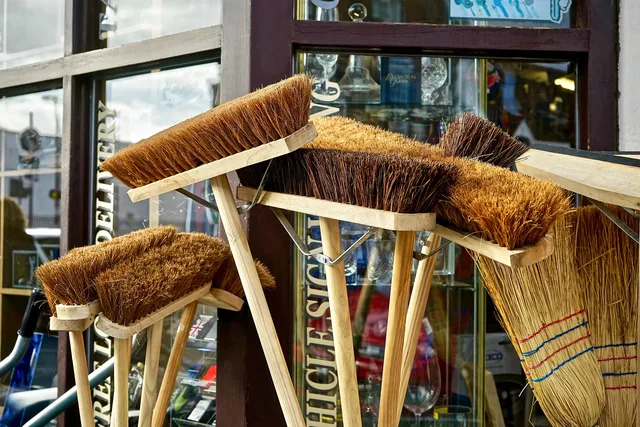
Tier one: flue cleaning. Polypropylene brushes in a range of diameters, and the rods that drive them. Rutland sells poly heads in a range of round sizes, typically $20 to $60 each. Carry at least three sizes: a 6-inch liner and an 8-inch masonry flue take different heads.
Stiff wire brushes are for masonry only; they score stainless liners. Masonry wire heads run $20 to $50.
Fiberglass rods flex around offsets; nylon rods are lighter but whip in tall stacks. Rods come in 5-foot lengths with threaded ferrules, about $20 to $45 each, or $120 to $300 for a kit.
Tier two: containment. A HEPA vacuum rated for fine particulate, canvas drop cloths, a hearth cover, and a sealable waste container. HEPA-certified shop vacuums such as the Nilfisk GM 80, DEWALT DWV010, and Festool CT 15 run about $400 to $1,500.
The vacuum is the single most expensive tier-one or tier-two item, and the one clients notice. A shop vac with a drywall filter does not contain soot at the micron level.
Trimaco canvas drop cloths, $20 to $60, and a hearth cover protect floors and furnishings. A 3M 6000-series half-mask with P100 filters costs roughly $30, with replacement cartridges at $10 to $15 a pair.
Tier three: verification. A chimney camera, a flashlight rated for the flue's depth, and a combustion analyzer if you offer efficiency checks. Streamlight and Milwaukee make rechargeable lights that reach into a stack. RIDGID micro CA-350 and Milwaukee M-Spector 360 cameras sell for about $250 to $600; Wohler VIS units cost more.
The camera is the referral engine: photograph the cracked tile, hand the image to the homeowner, and let the CSIA-certified technician quote the repair. You get the cleaning contract back next year.
What each item is for, and when to buy it
| Item | Purpose | Buy when |
|---|---|---|
| Poly brushes, 3+ sizes (Rutland, $20 to $60 each) | Match flue internal dimensions | Before first job |
| Fiberglass rods, 5 ft (threaded, $20 to $45 each) | Drive the brush past offsets | Before first job |
| Wire brush (masonry heads, $20 to $50) | Strip heavy soot from brick and clay only | Before the first masonry job |
| HEPA vacuum (Nilfisk GM 80, DEWALT DWV010, Festool CT 15) | Contain fine soot at the source | Before first job |
| Drop cloths and hearth cover (Trimaco canvas, $20 to $60) | Protect floors and furnishings | Before first job |
| Respirator (3M 6000 series, P100 filters) | Keep soot out of your lungs | Before first job |
| Chimney camera (RIDGID micro CA-350, Milwaukee M-Spector 360) | Document flue condition, generate referrals | Revenue covers the payment |
| Drill-powered whip (Gardus Sooteater, $70 to $120) | Brush light creosote from liners | Light creosote work appears in your market |
| Rotary power rods (professional sets) | Clear heavy creosote in masonry | You turn down jobs for lack of it |
| Combustion analyzer (Testo 320, Bacharach Fyrite InTech) | Verify appliance efficiency | You sell efficiency checks |
Where to buy: Amazon and Home Depot stock Rutland, Gardus, Trimaco, Milwaukee, and RIDGID; Grainger and industrial suppliers carry Nilfisk and other HEPA vacuums; Festool sells through its dealer network.
The EPA's wood-burning installation and maintenance page treats the appliance, chimney, and vent as one system, and notes fire officials recommend an annual professional inspection.
That framing is why the camera sits in tier three rather than tier one: the cleaning is the job, the inspection is the product.
The EPA's chimney sweeps page offers homeowner outreach material.
Used versus new, and where the money goes
A used HEPA vacuum at half the new price is usually a good buy if the filter housing is intact and the motor has service records. Used cameras are riskier: sensor damage is invisible until you are on a roof.
Rotary rods wear at the couplings, so inspect them before any used purchase. Ask for the last filter change date on a vacuum, and test a camera in a dark closet before you pay.
The arithmetic is simple. If a power rod set costs $C and clears jobs you currently decline or subcontract at $R each, it pays for itself in $C ÷ $R jobs. For example, a $900 set against $250 declined jobs pays back in four calls. Substitute your own figures; equipment prices and your rates are yours to check.
Subcontract the work you cannot yet do. A sweep who refers rotary work to another company keeps the client and the relationship. A sweep who attempts it without the kit damages a liner and pays for it twice.
Before you standardize a purchase across the fleet, run the equipment and setup guide against your own service mix. OSHA's safety management guidance is the frame for the pre-use and out-of-service checks that belong on every asset, whatever you buy.
Common questions
Do I need a camera to start?
No. A flashlight and a mirror will get you through the first season. Buy the camera when you can document enough flue defects to justify the referral revenue, or when a client asks for photographic proof of condition. A basic RIDGID or Milwaukee unit starts near $250.
How many brush sizes should I carry?
Three covers most residential work: one for a 6-inch liner, one for an 8-inch masonry flue, and one smaller head for tight offsets. Add sizes as your service area's housing stock demands, not before.
Is a shop vacuum good enough for containment?
No. Fine soot passes through a standard filter and settles through the house. A HEPA-rated vacuum is the containment standard for interior work, and the cost is part of your startup, not an upgrade.
What should I rent instead of buy?
Rotary power rods and combustion analyzers. Both are expensive, both sit idle between jobs, and both are available for rent or subcontract in most markets until your volume justifies owning them.
What does a starter kit cost?
Typical first-season outlay: three poly brushes ($60 to $180), six fiberglass rods ($120 to $270), a HEPA vacuum ($400 to $1,500), and drop cloths plus a respirator ($50 to $100). Expect roughly $650 to $2,000, with the vacuum driving most of the spread.