
Guides
Chimney Sweep Van Setup: Compact Van vs Full-Size
Chimney sweep van setup ideas for compact and full-size vans: compare cargo space, standing height, payload, ladder storage, and daily driving before you buy.
What to take away
- Chimney sweep van setupa compact van works for a one-person operation in tight urban areas, while a full-size van works for two-person crews and heavy debris.
- The decision rests on cargo length, standing height, payload, and how often you haul ladders and a dust containment system.
- Use a criteria table to compare the two classes before choosing a model.
What is being compared
The compact van class includes the Ford Transit Connect and Nissan NV200. The full-size class includes the Ford Transit and Ram ProMaster.
A compact van fits narrower driveways and costs less to fuel. A full-size van gives you more cargo length and optional high-roof standing room.
Both can carry brushes, rods, vacuums, ladders, and drop cloths, but the daily experience changes with the size. In the US, the Transit Connect ended after 2023 and the NV200 after 2021, so compact vans now come mainly from the used market.
The criteria that matter
Chimney sweeps need to compare cargo length, standing height, payload, ladder storage, and maneuverability. OSHA's rules for materials handling and storage apply to how you secure ladders and toolboxes inside either van. Use this matrix to match the van to your typical job.
Compact vs Full-Size Van Criteria
Compact van
- Rear cargo length
- 24-ft ladder on roof rack
- Standing room
- None; load from outside
- Payload
- One person, small vacuum
- Daily driving
- Easier in alleys
- Dust containment
- One sealed bin
Full-size van
- Rear cargo length
- 24-ft ladder inside or rack
- Standing room
- High-roof models available
- Payload
- Two crew, heavy HEPA vacuum
- Daily driving
- Wider turns, more blind spots
- Dust containment
- Separate dust zone, sorted bins
Compact van (Ford Transit Connect, Nissan NV200)
- Rear cargo length
- About 6 to 7.5 feet behind the front seats
- Standing room
- None; you load from outside or kneel
- Payload
- Typical 1,400 to 1,700 lbs
- Daily driving
- Easier in alleys and tight driveways
- Dust containment
- Works best with one sealed bin and a small drop zone
Full-size van (Ford Transit, Ram ProMaster)
- Rear cargo length
- About 10 to 13 feet behind the front seats
- Standing room
- Available in high-roof models
- Payload
- Typical 3,000 to 4,500 lbs
- Daily driving
- Wider turning circle and more blind spots
- Dust containment
- Allows a separate dust zone and multiple sorted bins
This table does not rank one as better; it shows which layout fits your work pattern. Van size also changes labor time, which flows into chimney sweep quotes.
Option by option
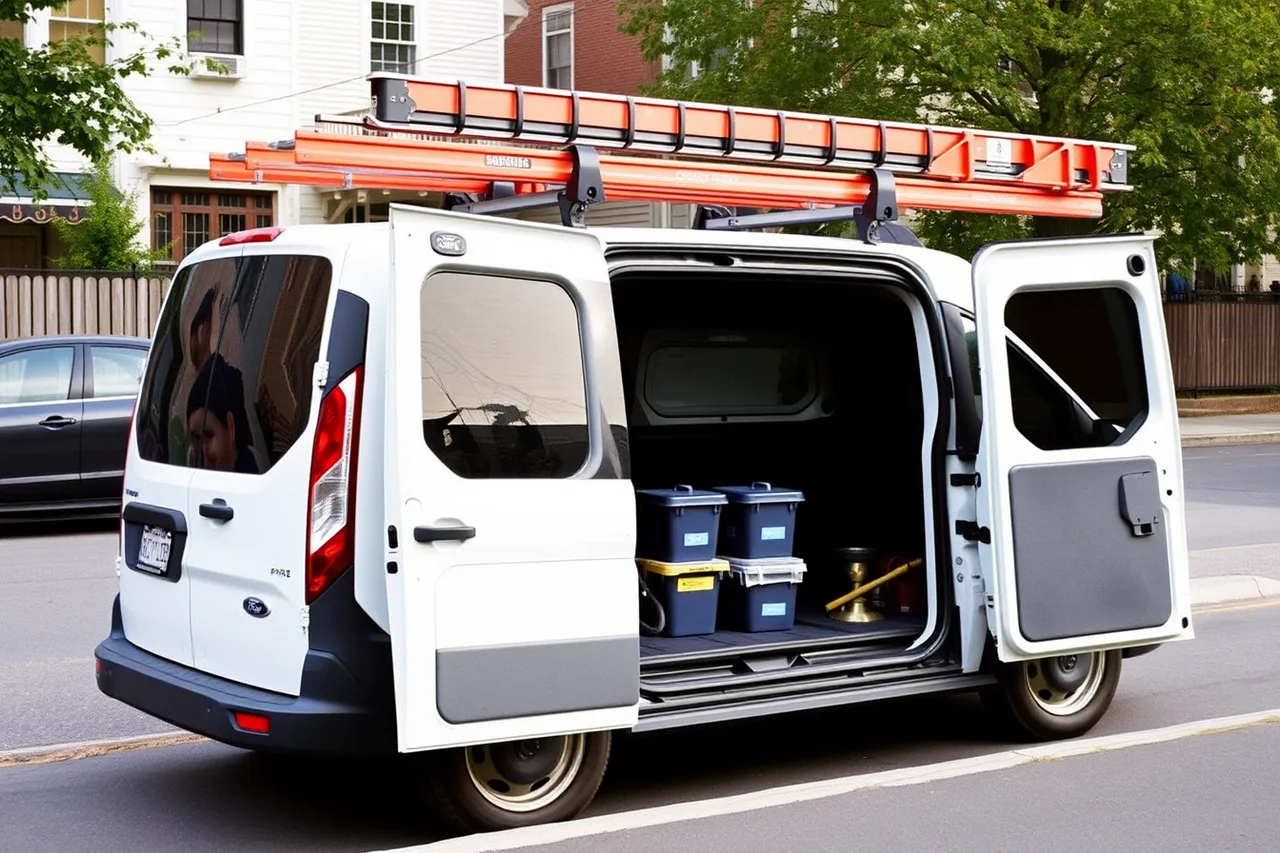
A compact van setup works when the daily load is simple. A Ford Transit Connect with a roof rack can carry a 20-foot ladder, one chimney vacuum, a small rod set, and two sealed bins for creosote and soot.
The rear doors and sliding side door make the gear reachable from the curb. The cab stays clean because the cargo area is one small, well-defined zone.
A Nissan NV200 offers similar space with a payload around 1,480 lbs and a cargo length near 6 feet 10 inches.
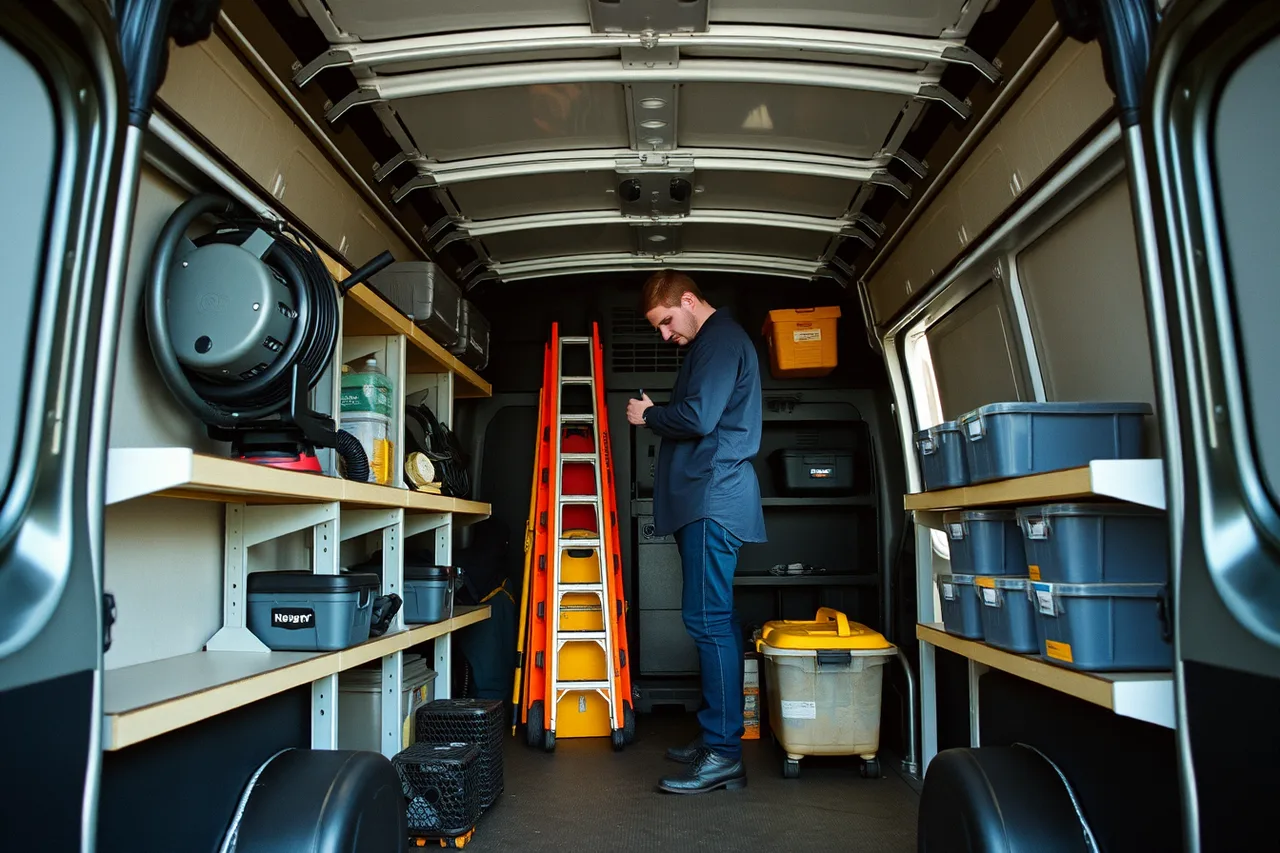
A full-size van works when the load grows. A Ford Transit high-roof or Ram ProMaster with shelving on both walls can carry a rotary cleaning system, chimney camera, high-capacity HEPA vacuum, full ladder set, and five or six sealed bins.
A Ford Transit can have a payload from about 3,000 to over 4,500 lbs and a cargo length from about 10 feet 6 inches to over 13 feet, depending on roof and wheelbase. A Ram ProMaster offers a payload from about 3,000 to 4,600 lbs and a cargo length from about 10 feet to over 13 feet.
The high roof lets a person stand while sorting tools, which reduces back strain on long days. A chimney sweep staff training should include a van loading order so the first tool needed is never buried.
Cost differences
Buyers weighing compact versus full-size care about purchase price, fuel, and maintenance. The ranges below are typical for recent US model years.
Compact van
- Purchase price, new (when available)
- $23,000 to $30,000
- Used market
- $10,000 to $20,000
- Fuel, combined
- 24 to 28 mpg
- Annual fuel at 15,000 miles, $3.50 per gallon
- $1,900 to $2,200
- Annual maintenance
- $800 to $1,200
Full-size van
- Purchase price, new (when available)
- $35,000 to $50,000
- Used market
- $20,000 to $35,000
- Fuel, combined
- 15 to 18 mpg
- Annual fuel at 15,000 miles, $3.50 per gallon
- $2,900 to $3,500
- Annual maintenance
- $1,200 to $1,800
Where each one wins
A compact van wins for solo sweeps on narrow streets with ladders under 20 feet. A full-size van wins for two-person crews hauling a rotary system and high-capacity vacuum on large jobs. No single option wins every time; each fits a different operating pattern.
What none of them solve
Neither van type removes the need for roof fall protection. A roof rack, a ladder, and a high roof do not provide anchor points. You still need a written fall protection plan and the right harness. Follow the fall protection rules for US crews. The van is transport, not a substitute for safe roof access.
Shared Van Safety and Waste Checklist
- Sealed metal or heavy plastic creosote bin, closed before driving
- Fall protection harness and lanyard stored in the cab
- Locking drawer for small parts reachable from rear doors
- First aid kit mounted where both seats can reach it
Creosote waste is another fixed problem. The EPA's RCRA rules require you to handle hazardous waste carefully. Both compact and full-size vans must carry a sealed metal or heavy plastic bin, and that bin must be closed before you leave the job. No layout change gets rid of that requirement. Use this checklist for either van:
- A sealed metal or heavy plastic bin for creosote debris, closed before driving.
- Fall protection harness and lanyard stored in the cab, not buried under tools.
- A locking drawer for small parts reachable from the rear doors.
- A first aid kit mounted where both seats can reach it.
The shared limitation is that a van is only a container. It does not control dust on the roof, and it does not make creosote non-hazardous. You still need the same safety and waste procedures in any vehicle.