Guides
Halifax chimney sweeping and the Atlantic damp climate
Halifax chimney sweep climate work means damp, windy weather, freeze-thaw cycles and insurer requests for annual sweeping records, plus masonry repair advice.
What to take away
- The Halifax chimney sweep climate combines damp, windy weather with salt air and repeated freeze-thaw cycles, so masonry deteriorates faster here than in inland Canada.
- Water is the main enemyspalling brick, cracked crowns and failed flashing all start with moisture that never fully dries.
- Halifax insurers often ask for annual sweeping records before they will keep or renew coverage on a wood-heating home.
- Schedule sweeping around Atlantic storm seasons and nor'easters, not through them, and document every visit to NFPA 211.
- Advise homeowners on caps, crowns and repointing before winter, because repairs done in the damp shoulder season rarely hold.
Why Halifax's damp, windy weather is hard on masonry chimneys
Halifax sits on the Atlantic, and that shapes every chimney you touch. Fog, drizzle and onshore wind keep exterior masonry wet for days at a time. Wind drives rain sideways into joints that would stay dry in a sheltered inland town.
Wet brick and mortar then dry slowly. Each wetting and drying cycle moves salts through the masonry, and those salts crystallize just under the surface. The face of the brick flakes away. Sweeps here see it on the windward side of a stack first.
Heating demand matters too. Statistics Canada publishes housing and heating data that shows how many Canadian households rely on wood and other solid fuels, which drives service demand in older Halifax neighbourhoods. You can review the national picture through Housing statistics.
Older housing stock in the city's core adds to the workload. Many chimneys were built with soft brick and lime mortar, and both absorb water readily. A chimney that looks sound in July can show open joints by November.
Salt air, freeze-thaw cycles and spalling brick
Salt air speeds up masonry deterioration in Halifax. Airborne chloride settles on the stack, draws moisture from the air and keeps the surface damp long after rain stops. Mortar joints soften, then erode.
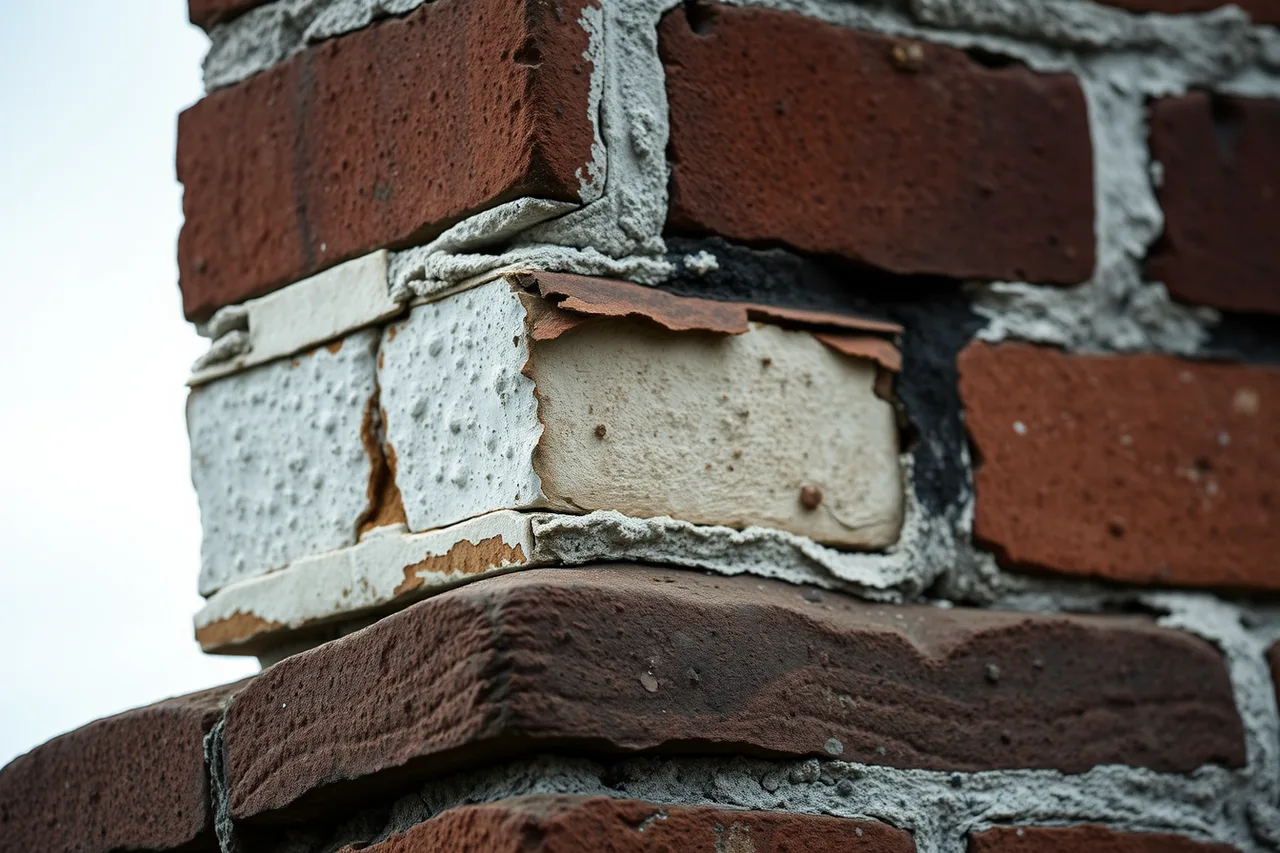
Freeze-thaw cycles finish the job. Halifax swings above and below zero repeatedly through winter and early spring. Water sitting in a hairline crack expands when it freezes and pushes the brick apart.
Spalling brick is the visible result. Look for faces sheared off, crumbling mortar, white efflorescence and rust stains from a failing liner or damper. Any of these means water is getting in somewhere.
A freeze-thaw chimney can also loosen the crown and shift the top few courses. Check the crown for cracks wider than a credit card and probe the mortar with a screwdriver. Soft mortar means repointing, not patching.
Why Halifax insurers ask for annual sweeping records
Insurers in Nova Scotia treat a wood-burning appliance as a higher-risk heating source, and creosote is the reason. A chimney fire can start from a buildup that a homeowner never sees. Annual sweeping records are the simplest proof that the flue has been maintained.
When a client calls about a renewal notice, ask what the insurer actually wants. Most requests are for the date of the last sweep, the name of the company and a note on the flue condition. Some ask for photos of the firebox and the cap.
Document each visit to the NFPA 211 inspection standard, which covers chimneys, fireplaces, vents and solid fuel appliances. The standard's scope and development history are set out in NFPA 211 Standard Development. A report that cites it carries more weight than a handwritten receipt.
Keep records for at least three years, and give the homeowner a copy the same day. If a claim ever happens, the paper trail protects both of you. Know what your own business insurance says about documentation, because your client's policy and yours meet at the same file.
Scheduling around Atlantic storm seasons and nor'easters
Halifax weather sets the calendar. Hurricane season runs into late autumn, and nor'easters hit hardest from December through March. Roof access during those months is a safety problem, not a scheduling inconvenience.
Book masonry inspections in late spring and early summer, when walls have dried and defects are readable. Book sweeping from late summer into October, before the first heating season. Leave storm weeks open for emergency calls and cancellations.
Wind is the practical limit. Most sweeps here stop roof work when sustained winds pass about 40 km/h, and gusts make a ladder unsafe well before that. Build weather days into the schedule instead of promising fixed slots.
A written sop checklist keeps storm-season decisions consistent: when to climb, when to reschedule and what to tell the customer. Crews that improvise in bad weather take risks they do not need to take.
Moisture readings and what to note in a Halifax inspection
A moisture meter turns a vague opinion into a record. Take readings at the same points on every visit: the crown, the top three courses, the mid-stack on the windward face and the interior breast above the thimble.
Write down the percentage, the location and the weather on the day. A reading taken after three days of rain is not comparable to one taken in a dry week, so note conditions. Trends across visits tell you more than any single number.
Photograph anything you flag. Cracks, spalling, efflorescence and rust all belong in the file with a date. Insurers respond to images and measurements, not adjectives.
Note the appliance, the fuel, the liner type and the last sweep date. If the home has had a heating upgrade, mention it, because efficiency work changes how a flue performs. Natural Resources Canada maintains guidance on building energy efficiency through Energy efficiency for buildings - Natural Resources Canada.
Run every inspection the same way, and review the results against your own service quality standards. Consistency is what makes a Halifax record credible when someone else reads it.
A worked example
A Halifax homeowner on the peninsula gets a renewal letter asking for sweep records. Her 1920s brick chimney shows spalling on the northeast face, a cracked crown and a moisture reading of 24 per cent at the top courses three days after rain.
The sweep documents the readings, photographs the crown and recommends repointing the top four courses plus a new crown. The insurer receives the report, the last two sweep dates and the photos. Coverage continues with a condition that the crown work is done before the next heating season.
Advising homeowners on caps, crowns and repointing
A cap is the cheapest protection and the first thing to recommend. A stainless cap with mesh keeps rain out of the flue and stops birds and squirrels without restricting draft. Fit it properly, because a loose cap becomes a wind hazard.
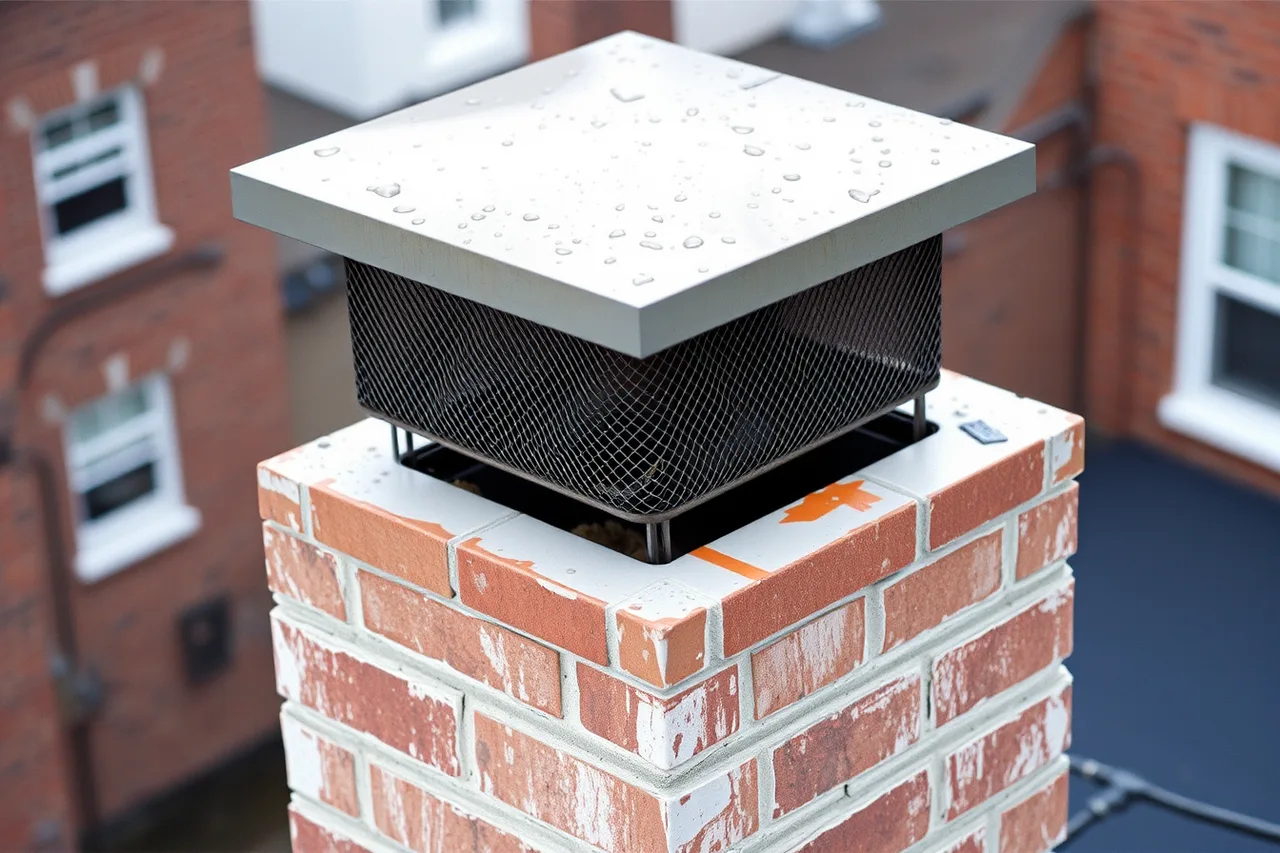
A crown should shed water away from the flue, not trap it. Poured crowns with a proper overhang and a flexible sealant at the flue outlast mortar crowns, which crack within a few Halifax winters. Replace a crown that has cracked through.
Repointing is not cosmetic here. Cut out soft mortar to a real depth, match the mortar to the brick's hardness and avoid hard cement mortars that trap moisture and spall the brick face. Done badly, repointing accelerates the damage it was meant to stop.
Before any of this work, confirm your business is properly registered and permitted. Federal guidance on permits, licences and regulations is collected at Permits, licences and regulations - Canada.ca, and Nova Scotia has its own requirements on top of that.
Your compliance checklist should cover provincial registration, workers' compensation and any municipal rules. Health and safety duties differ by province, and the CCOHS overview of provincial acts is a useful reference at CCOHS: Acts and Regulations.
Good chimney sweep operations tie all of this together: the inspection, the record, the advice and the follow-up booking. In Halifax, the weather does half the damage for you, so the paperwork is what keeps the customer covered.
Pre-winter checklist for Halifax clients
- Stainless cap fitted and secured against wind
- Crown inspected and cracks sealed or the crown replaced
- Mortar joints probed on the windward face
- Flashing and counter-flashing checked for gaps
- Moisture readings taken and recorded with the date
- Sweep certificate and photos sent to the homeowner
- Crown or repointing work booked before the first freeze